


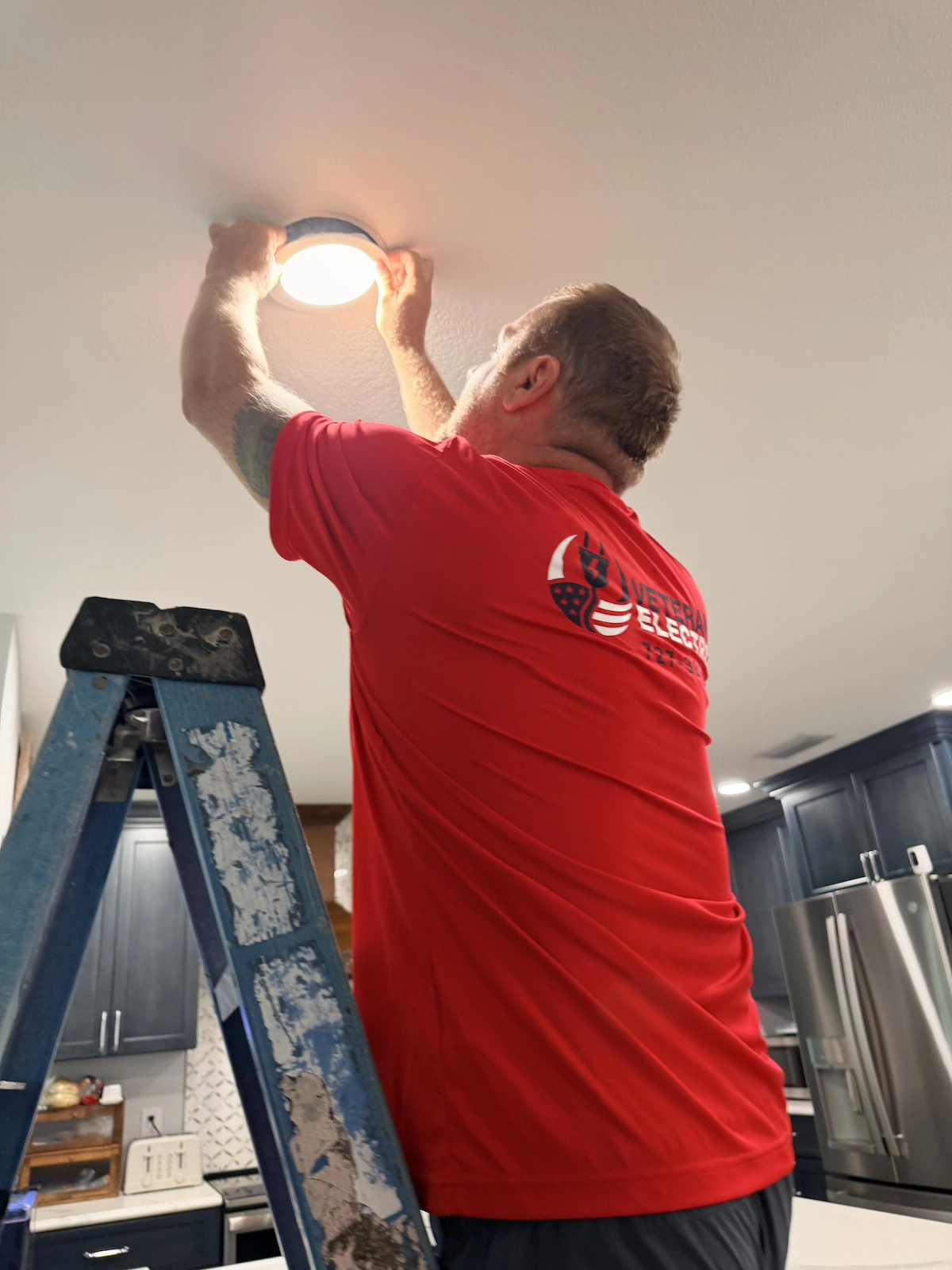
Flickering lights are one of those household quirks that are easy to brush off. Maybe you assume it’s just an old bulb, or a quirky lamp, or a “that’s just how this house is” kind of thing. But flickering lights are actually one of the most common ways your electrical system tries to get your attention. Sometimes the fix is as simple as a bulb. Other times, it’s a sign of a wiring issue that could put your home at risk.
If you’ve noticed your lights flicker, dim, or buzz in Tarpon Springs or anywhere in the Tampa Bay area, here’s what could be causing it, and how to know when it’s time to call a licensed electrician.
The Harmless Causes (Usually)
Not every flicker is a red flag. Before assuming the worst, it helps to rule out the simple stuff.
Loose or Incompatible Bulbs
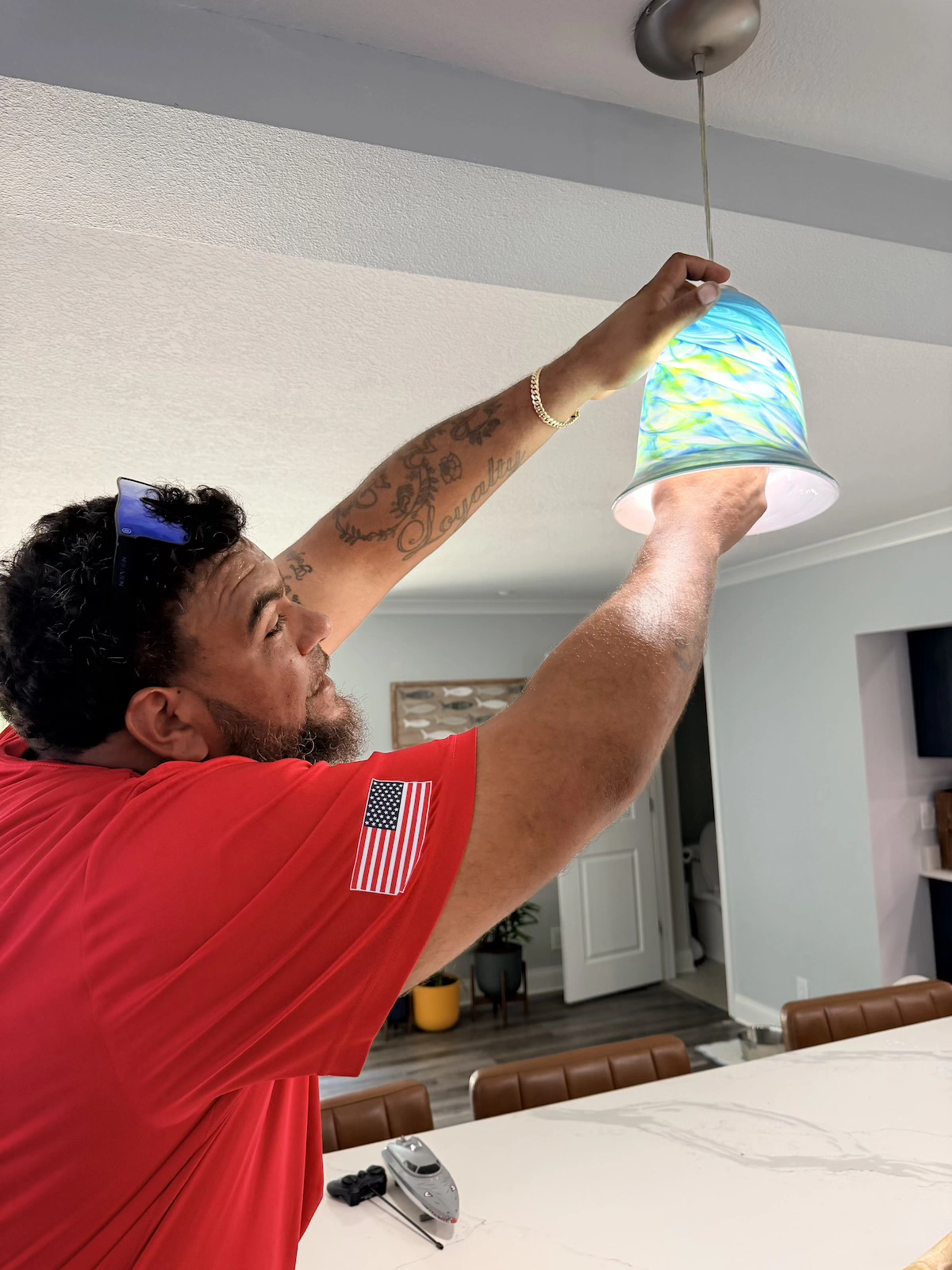
A bulb that isn’t screwed in all the way can cause an inconsistent connection, leading to flickering. This is especially common with LED bulbs, which are more sensitive to voltage fluctuations than old-school incandescent bulbs. If only one fixture is flickering and it happens with a specific bulb, that’s usually your first clue.
Dimmer Switch Compatibility
Older dimmer switches weren’t designed with modern LED bulbs in mind. If you’ve swapped in LEDs but kept an older dimmer, the mismatch can cause buzzing, flickering, or lights that won’t dim smoothly. This is a quick fix for one of our electricians. It usually just means replacing the dimmer with an LED-compatible model.
Large Appliances Kicking On
Ever notice your lights dip for a split second when the AC compressor kicks on, or when the refrigerator cycles? That’s normal. Large appliances draw a big burst of power when they start up. This can cause a brief, harmless dip in voltage elsewhere in the house. If it’s a quick flicker tied to a specific appliance and it happens consistently, it’s usually nothing to worry about.
When Flickering Signals a Real Problem
Here’s where things get more serious. If flickering is happening across multiple rooms, getting worse over time, or paired with other warning signs, your home’s wiring or electrical panel may need professional attention.
Loose Wiring Connections
Over time, wiring connections in outlets, switches, and junction boxes can loosen due to age, heat cycling, or even minor vibrations in the home. A loose connection creates resistance, which can cause flickering, and in more serious cases, heat buildup. Loose wiring is one of the leading causes of electrical fires. This is exactly why this isn’t a problem to leave alone.
An Overloaded Circuit
If your lights flicker whenever you turn on the microwave, run a hair dryer, or start the washing machine, there’s a good chance of a circuit overload. Older homes were wired for a different era of electrical demand. An overloaded circuit puts a strain on your system that can lead to tripped breakers or worse.
An Aging or Failing Electrical Panel
Your electrical panel is the command center for every circuit in your home. If it’s outdated, damaged, or simply undersized for your household’s needs, it may struggle to deliver consistent power, which can show up as flickering lights throughout the house. This is especially common in older homes throughout Tarpon Springs and the greater Tampa Bay area that haven’t had a panel upgrade in decades.
Loose Utility Connections
Sometimes the problem isn’t inside your home at all. A loose connection at the utility’s electrical meter or the service line running to your house can cause flickering that affects your entire home, not just one room or circuit. This is a bigger concern than an internal wiring issue and needs prompt attention.
Aluminum Wiring
If your home was built between the 1960s and 1970s, there’s a chance it was wired with aluminum instead of copper. Aluminum wiring expands and contracts more than copper, which loosens connections at outlets and switches over time. This is a well-documented safety concern in older homes, and flickering lights are often one of the earliest warning signs.
Other Warning Signs to Watch For
Flickering rarely travels alone. If you notice any of these happening alongside it, don’t wait to have your electrical system checked out:
- A burning smell near outlets, switches, or your panel
- Warm or discolored outlet covers or switch plates
- Buzzing or crackling sounds coming from outlets or fixtures
- Breakers that trip frequently
- Outlets that feel warm to the touch
Any one of these, paired with flickering lights, is a strong signal that it’s time to call a professional rather than wait it out.
When to Call an Electrician
A good rule of thumb: if the flicker is isolated to one bulb or fixture and goes away when you replace the bulb or dimmer, you’re probably fine. But you should call a licensed electrician if you notice any of the following:
- Flickering across multiple rooms or throughout the whole house
- Flickering that’s gotten worse over the past few weeks or months
- Flickering paired with buzzing, burning smells, or warm outlets
- Frequent breaker trips alongside the flickering
- Your home is more than 20-30 years old and hasn’t had an electrical safety inspection
Electrical issues have a way of hiding in plain sight until they become bigger, more expensive, or more dangerous problems. A licensed electrician can pinpoint exactly what’s happening, whether that’s a loose connection, an overloaded circuit, or a panel that’s ready for an upgrade, and fix it safely and correctly the first time.
Trust Veterans Electric with Your Home’s Wiring
At Veterans Electric, we bring the same discipline and attention to detail from our military service to every job, whether it’s a quick repair or a full home rewiring. Our licensed electricians proudly serve Tarpon Springs and the greater Tampa Bay area with honest, upfront pricing and no surprise fees.
If your lights are flickering and something feels off, don’t wait for it to get worse. Give us a call at (727) 387-8387 or schedule your appointment online, and let our team get to the bottom of it, day or night, 24/7.


