


If you live in Tarpon Springs or anywhere along the Tampa Bay coast, you already know the routine. A storm forms in the Gulf, the forecast cone shifts, and suddenly everyone is at the store buying water, batteries, and plywood. Then comes the part nobody enjoys: the days after, when the wind has passed but the power hasn’t come back. Losing power for a few hours is an annoyance. Losing it for days in the Florida heat is something else entirely. So many homeowners ask us the same question: is a whole-house generator actually worth it?
The honest answer is that it depends on your home, your household, and how much an outage would disrupt your life. This guide covers what a whole-house generator does, what to weigh, and how to decide.
Why Florida Is a Different Kind of Place for Power Outages
Florida homes depend on electricity more than homes in most of the country. Air conditioning isn’t a luxury here. It’s what keeps a house livable from late spring through fall. Humidity makes things worse, since a home without cooling can become uncomfortable quickly, and many households also rely on power for things that can’t wait:
- Medical equipment such as oxygen concentrators, CPAP machines, or refrigerated medications
- Well pumps and sump pumps that need electricity to run
- Refrigerators and freezers holding hundreds of dollars of food
- Home offices, internet, and phone charging
- Security systems, garage door openers, and lighting
Outages here also tend to last longer than a simple blown transformer. After a major storm, crews must clear fallen trees and repair damaged lines across entire regions, and restoration can take days. Even when your street isn’t damaged, you may be waiting your turn.
The Atlantic hurricane season officially runs from June 1 through November 30, so even as we move into the late-season weeks, storms remain possible. For up-to-date forecasts and preparedness guidance, the National Hurricane Center is the best place to start.
What a Whole-House Generator Actually Does
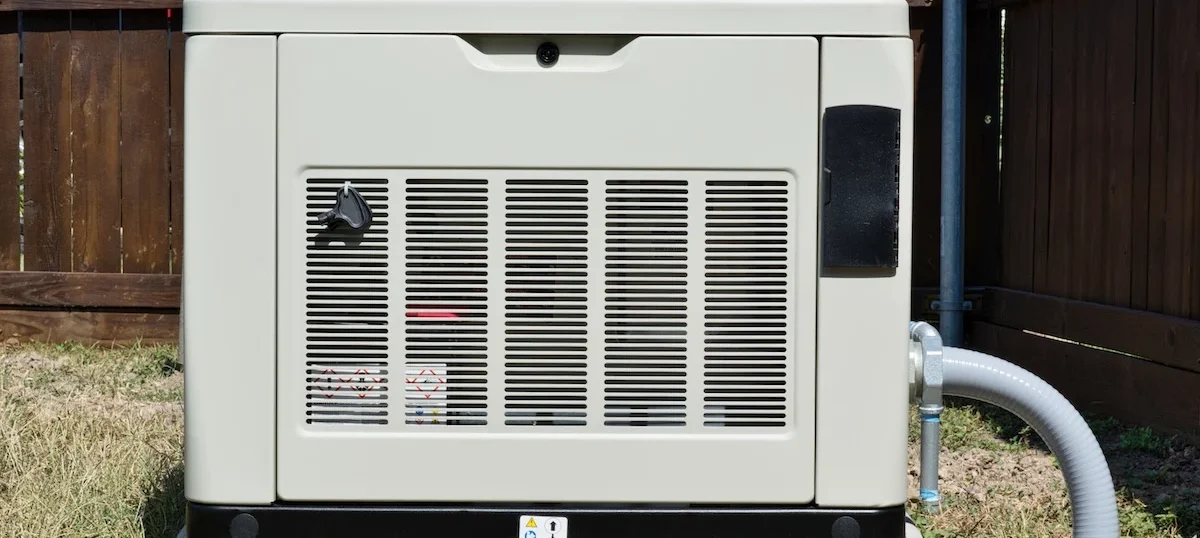
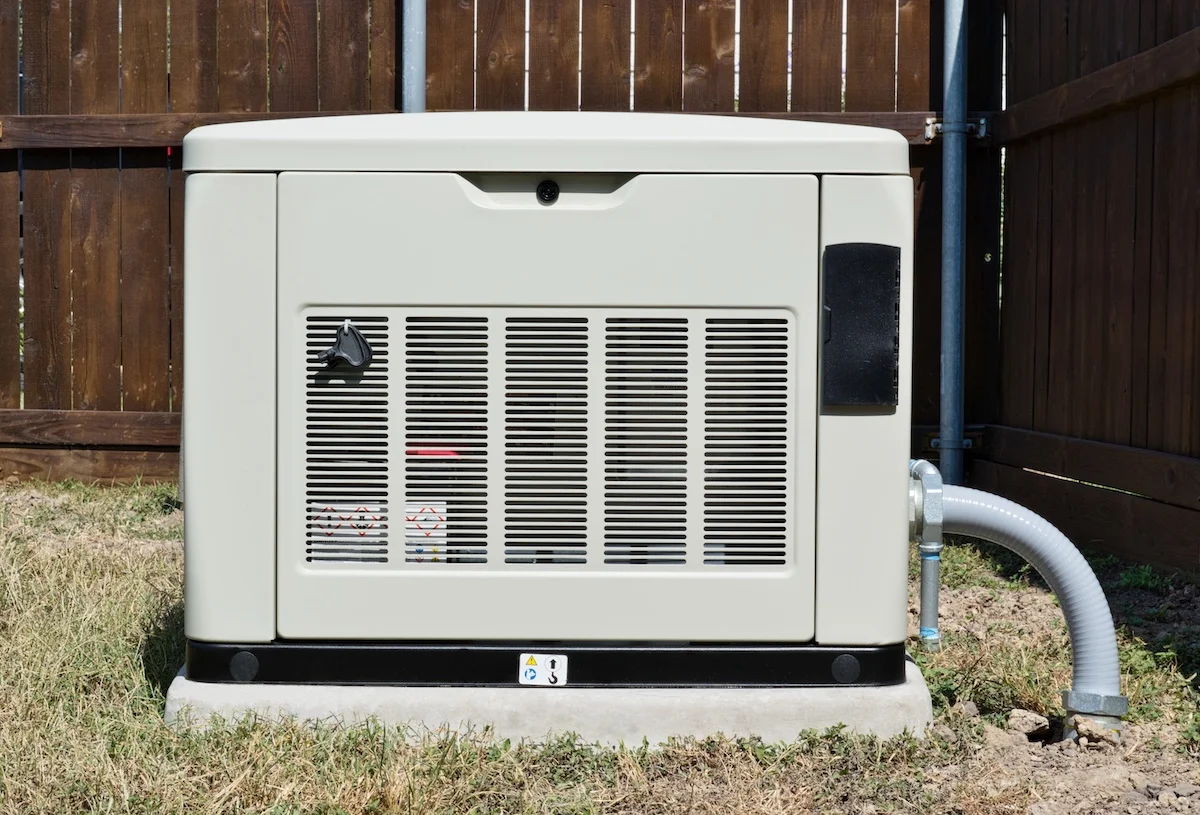
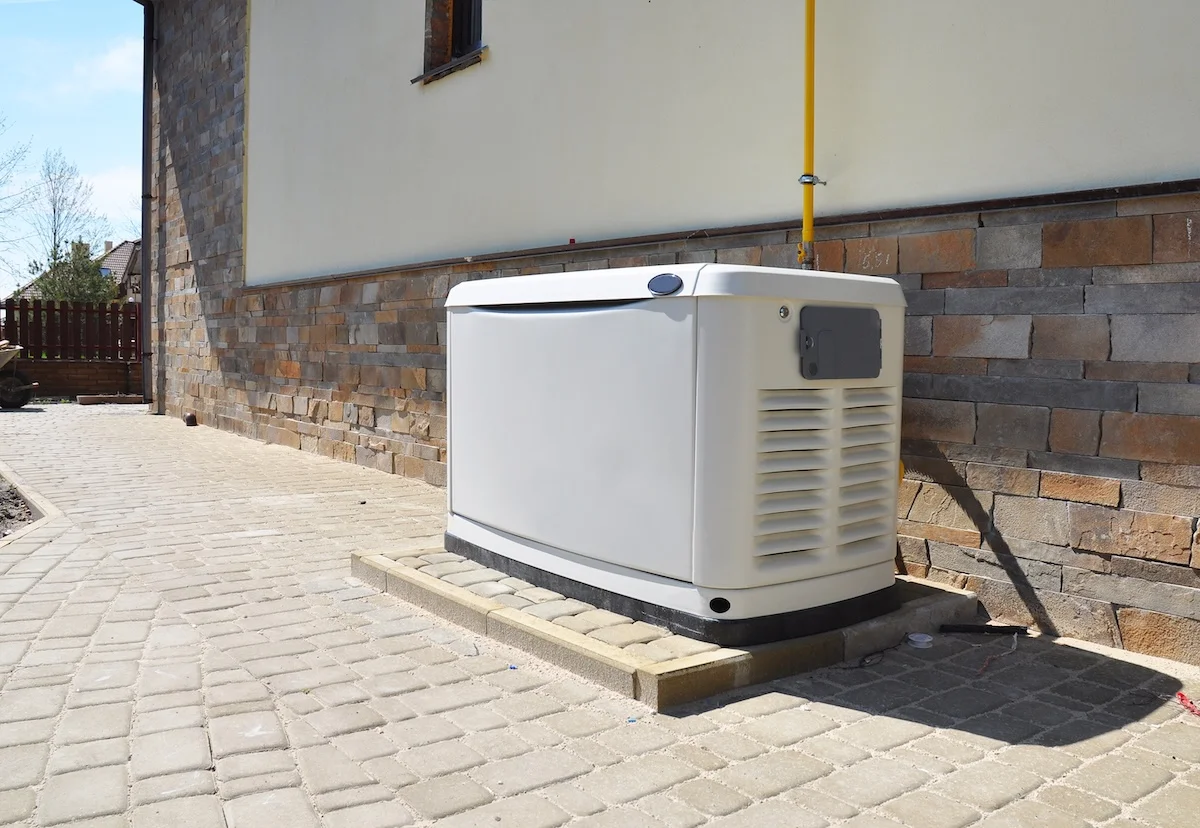
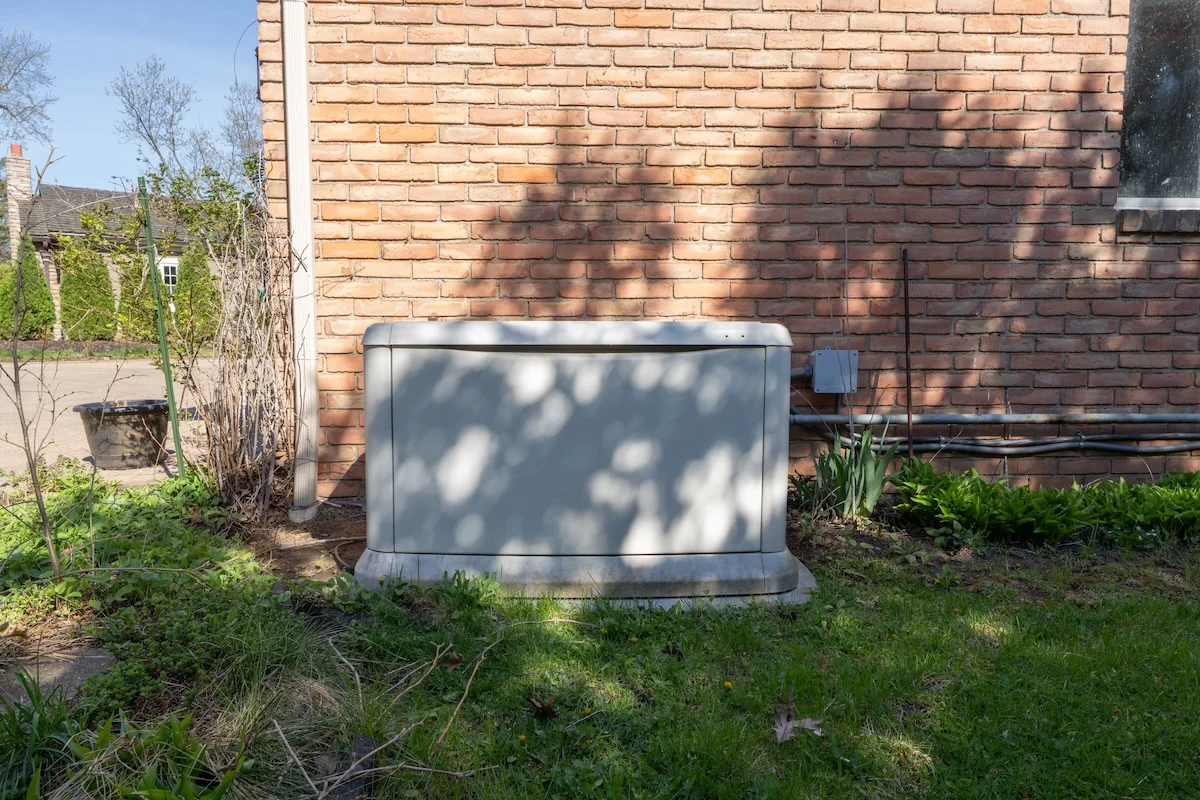
A whole-house generator, also called a standby generator, is a permanently installed unit that sits outside your home, usually on a concrete or composite pad, much like a central air conditioning condenser. It connects to your home’s electrical system through a transfer switch and typically runs on natural gas or propane.
When utility power goes out, the transfer switch detects the loss. Within seconds, the generator starts and restores power to your home automatically. When utility power returns, the system switches back and the generator shuts down. You don’t have to be home, you don’t have to go outside in a storm, and you don’t have to touch a thing.
That automatic operation is the biggest difference between a standby generator and the alternatives.
Whole-House vs. Portable Generators
Portable generators are the more affordable option up front, which is why they sell out before every storm. But they come with real trade-offs.
Portable generators:
- Must be set up and started by hand every time the power goes out
- Run on gasoline, which can be hard to find after a storm and difficult to store safely
- Can power only a few items at a time, usually through extension cords
- Create carbon monoxide risks if used too close to the home, which is a leading cause of storm-related injuries
- Need regular refueling, often through the night
Whole-house standby generators:
- Start automatically with no action from you
- Run on natural gas or propane, which are more reliable fuel sources in an extended outage
- Can power your entire home or a selected group of circuits
- Are installed outside at a safe distance, with the system designed around code and manufacturer requirements
- Add lasting value to the property
If an outage would simply be inconvenient for your household, a portable unit might meet your needs. If an outage would be disruptive, expensive, or unsafe, the convenience and reliability of a standby system start to matter much more.
The Real Question: What Does an Outage Cost You?
When people ask whether a generator is “worth it,” they usually mean the price. A fair evaluation looks at both the cost of the system and the cost of going without it.
Consider what an extended outage might mean for your household:
- Spoiled food. Replacing the contents of a refrigerator and freezer adds up quickly.
- Hotel stays. If your home becomes too hot to stay in, a few nights away can cost more than people expect.
- Lost work. If you work from home or run a business from your property, no power may mean no income.
- Health and safety. For households with medical needs, elderly family members, infants, or heat-sensitive pets, the stakes go far beyond money.
For some homeowners, a generator pays for itself in peace of mind alone. For others, especially in homes with low power needs and flexible plans, it may be a luxury they can reasonably skip. Only you can weigh that, but it’s a good idea to think it through before a storm is in the forecast rather than during one.
Other Benefits Worth Considering
Peace of Mind
Few things feel as good as hearing the generator kick on while the neighborhood goes dark. Storm preparation becomes simpler, and you’re free to focus on your family and your property instead of scrambling for fuel and extension cords.
Protection for Your Home
An automatic generator keeps essential systems running, including cooling, refrigeration, sump pumps, and security. That helps protect your home and belongings during the days when conditions are at their worst.
Year-Round Coverage
Hurricanes get the attention, but outages happen year-round. Summer thunderstorms, lightning strikes, and equipment failures can all knock out power, and a standby generator covers all of them.
How Generator Sizing Works
Whole-house generators come in a range of sizes, and bigger isn’t always better. The right size depends on what you need to power. A professional electrician will evaluate your home’s electrical demand, including:
- The size and number of air conditioning systems
- Whether you have electric appliances such as a water heater, range, or dryer
- Pool equipment, well pumps, or other large loads
- Whether you want to run the entire home or only critical circuits
Some homeowners choose to power everything. Others prefer a smaller system that handles essentials like cooling, refrigeration, lighting, and medical equipment. A good electrician will walk you through both approaches and give you an honest recommendation instead of simply selling the biggest unit.
Why Professional Installation Matters
A standby generator isn’t just a piece of equipment. It’s part of your home’s electrical and fuel systems, and it has to be installed correctly to be safe and reliable. That includes:
- Proper placement and clearance from windows, doors, and the structure itself
- A correctly sized transfer switch and code-compliant panel connections
- Coordination with your natural gas or propane fuel supply
- Required permits and inspections
The transfer switch is especially important. It prevents your generator from sending power back onto utility lines, which can endanger line workers trying to restore service. Generator installation is work that belongs with a licensed professional, from the planning stage through the final inspection.
When to Plan: Before the Storm, Not During It
One of the most common mistakes homeowners make is waiting until a storm is on the way. When a hurricane enters the Gulf, demand for generators, parts, and installation appointments surges, and schedules fill quickly. Permits, equipment availability, and fuel connections all take time.
Planning during a quiet stretch has real advantages. You’ll have time to compare options, ask questions, and choose a system that fits your home without feeling rushed. That’s one reason many homeowners choose to start the conversation in the off-season, long before the next storm is on the radar.
So, Is a Whole-House Generator Worth It?
Here’s a simple way to think about it. A whole-house generator is likely worth serious consideration if:
- Someone in your home depends on powered medical equipment
- You work from home or run a business from your property
- Your home depends on a well pump or sump pump
- You have a large home with significant cooling needs
- You’ve dealt with long outages before and don’t want to do it again
- You simply value the security of knowing your home is protected
If none of those apply and you’re comfortable riding out an outage, a smaller solution may be enough. The goal isn’t to push you toward the biggest system. It’s to make sure whatever you choose actually fits how you live.
Talk to a Licensed Electrician About Generator Installation in Tarpon Springs
At Veterans Electric, we’re a trusted Generac dealer, and we handle everything from sizing to transfer switch hookup. Our licensed electricians take the time to understand your home and your needs, then give you a clear, upfront recommendation with no surprise fees. Learn more about our whole-house generator installation services, or call us at (727) 387-8387 to schedule a free, no-obligation estimate.
We proudly serve Tarpon Springs and the greater Tampa Bay area, and our team is available 24/7. The best time to prepare for the next storm is before it forms.


